

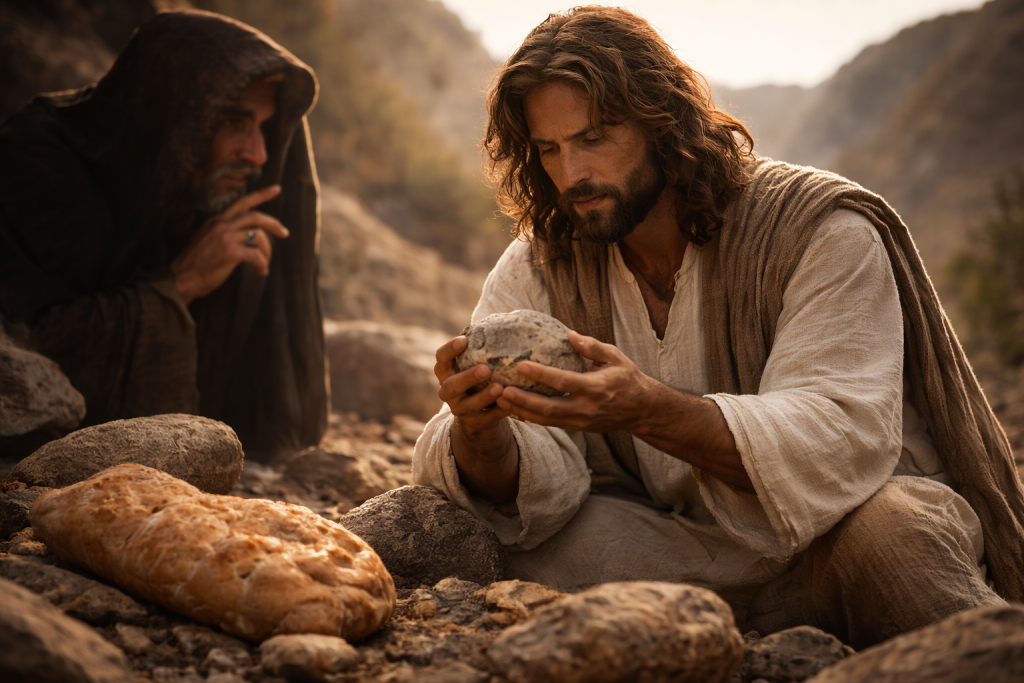
The Temptation of Jesus and the Power to Resist
As we begin a new series in the Gospel of Gospel of Luke, we’re intentionally starting in chapter 4. While the opening chapters cover Jesus’ birth and baptism—passages many of us revisit during Christmas and recent teachings—we’re stepping into the beginning of His public ministry.
This timing is significant. As we reflect on Palm Sunday and approach Easter, we’re not just looking at isolated moments—we’re seeing the “bookends” of Jesus’ ministry: His preparation in the wilderness and His ultimate fulfillment through the cross and resurrection.
Led by the Spirit into the Wilderness
Luke tells us that Jesus, full of the Holy Spirit, was led into the wilderness for 40 days. This is one of Luke’s key emphases—through both his Gospel and the book of Acts, he repeatedly highlights the work of the Holy Spirit.
Jesus wasn’t just led to the wilderness—He was led in the wilderness. The Spirit remained with Him throughout His testing. This is important: God does not abandon His people in seasons of temptation.
The 40-day period also echoes the stories of Moses and Elijah—both of whom experienced significant encounters with God over 40 days. Jesus, in this moment, stands as the fulfillment of both the Law and the Prophets.
Real Temptation, Real Humanity
It’s essential to understand: Jesus’ temptation was real.
According to Hebrews 4:15, Jesus was tempted “in every way” as we are—yet without sin. His divine nature didn’t make temptation meaningless. He was fully human, experiencing hunger, weakness, and the pull of desire.
Because of this, Jesus is able to truly sympathize with us. He knows what it’s like to be tested.
The First Temptation: Stones to Bread
After 40 days without food, Jesus was hungry. The devil’s first temptation was simple:
“Turn these stones into bread.”
There’s nothing inherently sinful about eating bread. The real temptation was deeper—to use His power outside of the Father’s will.
Jesus responds by quoting Scripture:
“Man shall not live by bread alone.”
He chooses dependence on God over immediate physical satisfaction.
The Nature of Temptation
This moment reveals something important: temptation is often strategic and personal.
The enemy doesn’t tempt randomly—temptation is tailored. It often comes when we are most vulnerable: hungry, angry, lonely, or tired.
What tempts one person may not tempt another. This should produce humility and grace toward others—we all have different areas of weakness.
The Second Temptation: Power and Glory
Next, Jesus is shown all the kingdoms of the world. The offer:
“All of this can be yours—if you worship me.”
This was a real temptation. Jesus had the right to authority and glory. But the shortcut required worshiping the wrong authority.
Jesus refuses, again quoting Scripture:
“Worship the Lord your God, and serve Him only.”
He chooses the Father’s plan over immediate power.
This connects directly to Palm Sunday, where people praised Jesus as King—but misunderstood how His kingdom would come. He would not take power by force, but through sacrifice.
The Third Temptation: Testing God
Finally, Jesus is taken to the temple and told to throw Himself down, with Scripture twisted to suggest God would protect Him.
Here, the temptation is subtle:
“Can you really trust God?”
Jesus responds:
“Do not put the Lord your God to the test.”
Rather than demanding proof of God’s faithfulness, He chooses trust.
A Misunderstood Mission
Even the enemy misunderstood Jesus’ mission. There was an assumption that God would prevent all suffering—but the cross was always the plan.
As 1 Corinthians 2:8 explains, if the rulers of this world had understood God’s plan, they would not have crucified Jesus.
Even the disciples didn’t fully understand at the time. When hardship came, they struggled to trust.
And we often do the same.
Jesus’ Victory Over Temptation
Throughout His life—not just in the wilderness—Jesus faced ongoing temptation:
- In the garden, He wrestled with the coming suffering
- At His arrest, He could have called down angels
- On the cross, He was challenged to save Himself
Yet every time, He chose:
“Not my will, but Yours be done.”
He remained obedient, becoming the perfect sacrifice for sin.
What This Means for Us
After the wilderness, Jesus returned in the power of the Spirit. That same Spirit is given to us.
So how do we resist temptation?
1. You Are Not Alone
The Holy Spirit is with you. You don’t fight temptation by willpower alone.
2. Expect Personalized Temptation
Your struggles will be specific to you. Know your weaknesses.
3. Watch for Vulnerable Moments
Temptation often comes when you’re tired, stressed, or isolated.
4. Respond with Scripture
Jesus used Scripture every time. We should too.
5. Stay Alert
Temptation doesn’t disappear—it returns at “opportune times.”
Walking in Freedom
There’s encouragement here: resisting temptation strengthens you. As you walk in the Spirit, you grow in the ability to keep walking in the Spirit.
God has not left you unequipped.
Through His Word and His Spirit, you have what you need to stand firm.
Final Reflection
What areas of temptation do you struggle with most?
Jesus understands. He has faced it. And through Him, there is both forgiveness and freedom.
The invitation is simple:
Bring those struggles into the light, rely on the Spirit, and trust that God is faithful—just as He has always been.